
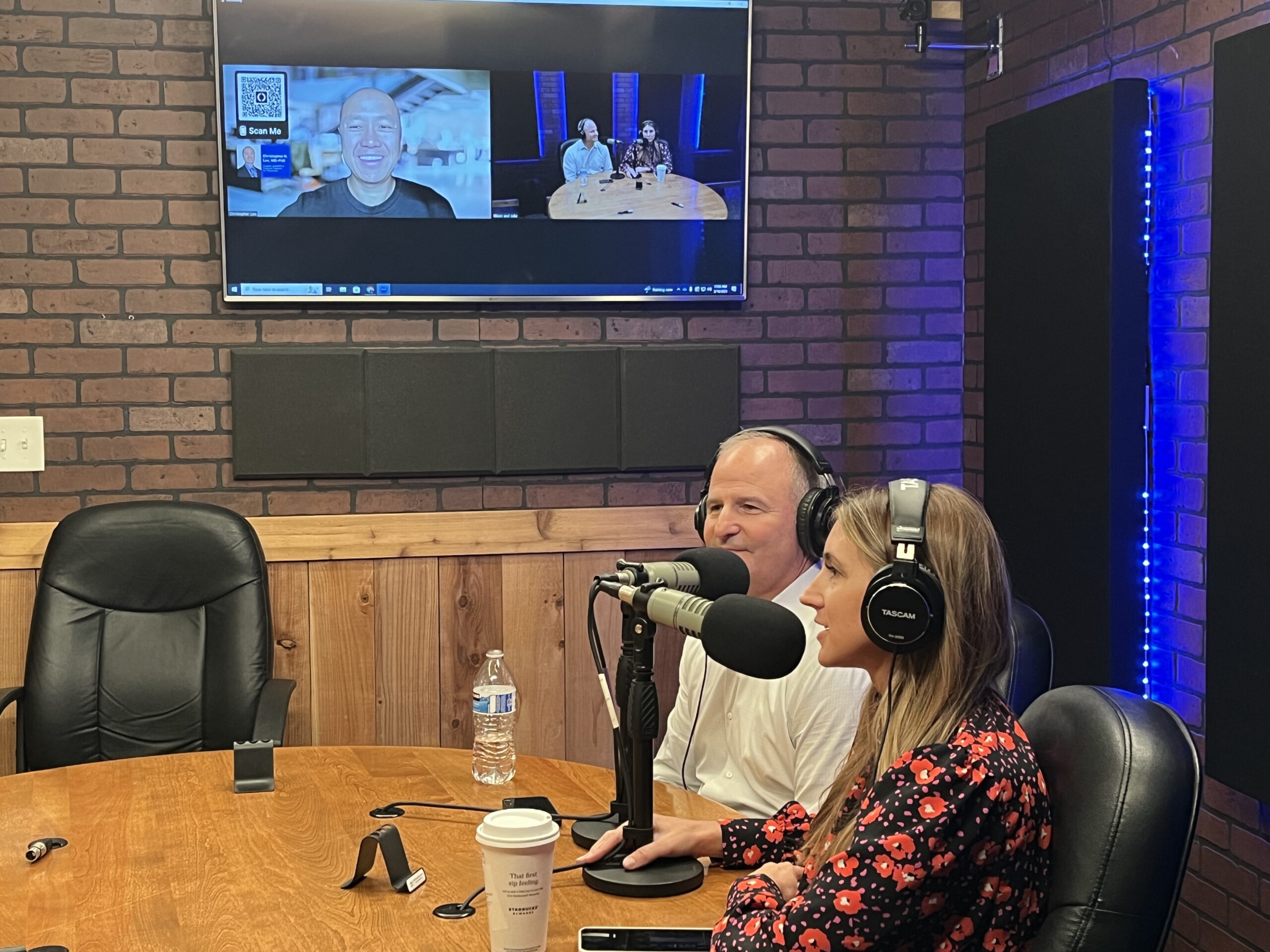
Adding video to your podcast show gets talked about like it’s the obvious next step for every podcaster. When you want to grow, build your authority, and stay relevant, it’s sounds pretty simple: add video.
But I don’t think the decision is that simple.
I’ve already explored whether video is really taking over podcasting. Don’t confuse a loud trend to be the right strategy for your show.
I think video can absolutely help the right podcast. It can create more visibility. Video opens up more ways to repurpose content. And, it can make your show feel more personal.
But I also think video adds real complexity to the work of making a podcast. It changes your production process, your editing, and your planning. And if you are not careful, it can start pulling your attention away from the actual job your podcast is supposed to do.
That’s why I always encourage podcasters to have an honest conversation about video. Not a hype-driven conversation. Not a fear-based conversation. An honest one.
Video can be valuable, but it’s never free
When I talk with podcasters about video, I’m not trying to talk them into it or out of it. I’m trying to help them evaluate it clearly.
There are real upsides.
Video can improve discoverability, especially when you’re using short clips on platforms where people are already consuming content. It can give you more material to repurpose into social posts, reels, and promotional assets. Video podcasting can also help build credibility because people get to see you, your expressions, presence, and the way you communicate.
For you, that may matter a lot. If your business depends on trust, expertise, personality, or relationship-building, video may strengthen what your podcast is already trying to do.
But it does come with cost.
Video podcasting isn’t just audio with a camera turned on. It creates a new production environment. You have to think about lighting, framing, background, camera quality, eye contact. In other words, how the show looks, not just how it sounds. All that may not sound like much at first, but those decisions add up quickly.
The real costs usually show up in the workflow
This is where I think a lot of podcasters get surprised.
They think about the benefits of video first, but they don’t always think through how much video changes the creation process from beginning to end.
Recording becomes more demanding. You arn’t just showing up ready to speak well. You are also thinking about how you appear on screen. That changes your energy and your focus. It can even change how relaxed and natural you feel behind the mic.
Editing becomes more involved too. Even if you keep things simple, video files are larger, workflows are slower, and revisions can take longer. Storage and delivery become more complicated. Publishing can involve more moving parts. Repurposing can help your visibility, but it also creates more pressure to keep feeding the system once you start.
That’s the part I want you to take seriously.
Because if your show already feels hard to sustain in audio form, adding video rarely makes it easier. In most cases, it makes the process more complex.
A podcast doesn’t fail only because the idea was bad. Sometimes it struggles because the workload no longer fits your life, energy, or capacity to create it.
The hidden cost is creative energy
To me, this is one most overlooked part of the conversation.
Video doesn’t only cost time or money. It also costs creative energy.
When you add video, you start paying attention to things that may not have mattered before. You think about the room and visual presentation. You think about how something will look clipped up later and whether it will be visually engaging. With an audio only podcast, didn’t have to worry about your appearance. Batch recording takes on another level of a change of clothes for each recording!
And that’s where I think you need to pause.
If the primary strength of your show is the clarity of your ideas, the honesty of your message, or the usefulness of your conversations, you can’t let visual production pull too much energy away from the thing that makes your podcast valuable in the first place.
I’ve seen podcasters make that shift without realizing it. They start out wanting video to support the show. Before long, the video workflow starts driving the show instead.
The better question is not “Should I do video?”
I think a better question is this:
What’s the primary job of my podcast, and would video help enough to justify the added cost?
The answer to that changes everything.
It also connects directly to the core job of your podcast. Get clear on what your show is really there to do. Then you can evaluate video with far more honesty and confidence.
If your show is meant to build personal trust, strengthen brand authority, or create more visible content for marketing, video may be worth serious consideration.
If your podcast is mainly designed to deliver helpful ideas consistently, nurture listener trust over time, or stay sustainable within limited bandwidth, the answer may be different.
This is why I don’t believe in one-size-fits-all podcast advice. Video isn’t a universal upgrade. It’s a strategic choice.
And strategic choices should be judged by fit, not trend pressure.
A simple tradeoff exercise I recommend
One of the easiest ways to think this through is to do a simple tradeoff exercise.
Take out a sheet of paper and draw a line down the middle.
On one side, write down the specific upsides adding video podcasting could create for your show. Not generic upsides. Specific ones. What would video actually help you do better? Reach more of the right people? Build stronger trust? Create better marketing content? Support your business model?
On the other side, write down the actual costs. Again, be specific. More prep? More editing? More pressure? More gear? More decisions? More fatigue? More time you don’t really have?
Then look at both sides honestly.
Not emotionally. Not aspirationally. Honestly.
If the upside clearly supports the real purpose of your show and you have the capacity for the extra workload, video may be the right move.
If the costs are likely to dilute your message, wear you down, or make the show harder to sustain, then video may not be the right move right now. And that’s okay. Not yet can be a smart decision.
Clarity matters more than FOMO
I understand why podcasters feel pressure around video. The conversation around it is overwhelming right now. It can seem like everybody is moving in that direction.
But I don’t think your job is to follow the loudest trend.
Your job is to build the version of your podcast that best serves your listeners, supports your goals, and stays sustainable for you over time.
Sometimes video helps do that. Sometimes it doesn’t.
The key is being honest with yourself recognize when and if it’s right for your podcast.
Frequently Asked Questions About Video Podcasting
Is video podcasting worth it for every podcast?
No. I think video can be valuable, but only when it supports the real job of the show and fits your capacity. For some podcasts, it adds reach and authority. For others, it adds complexity without enough return.
What’s the biggest downside of video podcasting?
The biggest downside is usually not the gear. It’s the added production complexities. Video affects recording, editing, publishing, and your creative energy. The extras can make a podcast harder to sustain.
How do I decide whether to add video to my podcast?
I recommend looking at the tradeoff clearly. Write down the specific benefits video could bring to your show, then write down the real costs it would add to your workflow. Compare both against the primary job of your podcast before deciding.
This is the kind of work I do every day as My Podcast Guy.
If your show feels slightly “off”, like you’re working hard but not really connecting, I can help you:
- Clarify your own why
- Clarify your listener’s why
- Redesign your intros, topics, and structure so those two whys stop pulling against each other
I’ll map out your engine, your listener’s destination, and how to get your podcast pointed toward both.
Need a studio in Central Ohio or the Columbus, Ohio area to record your podcast? Check out our go-to studio, Channel 511 in Columbus, Ohio.


[…] talk about this in earlier episodes too. In What’s the Core Job of Your Podcast?, I focus on understanding what the podcast is actually supposed to do. Once you know the job of the […]