
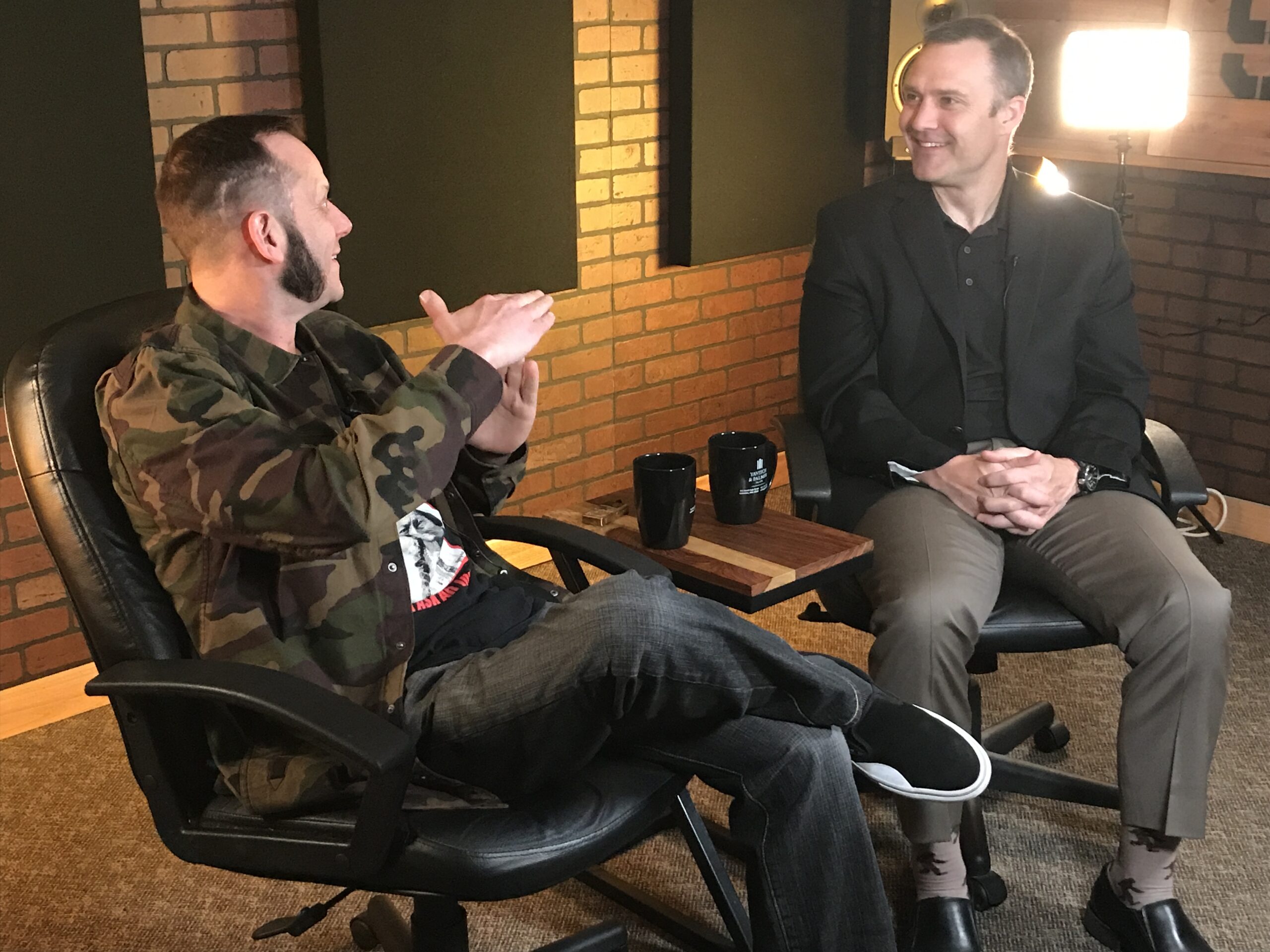
What Your Podcast Setup Is Really Saying To Your Followers
To record at home or in a professional studio? I understand the reason behind the question. On the surface, it sounds like a production decision.
But I don’t think it should start there.
It starts with a podcast strategy discussion and what your show is actually there to do.
Your Recording Environment Sends a Signal Before You Ever Speak
Before you say a single word in an episode, your recording environment has already communicated something. Your audio quality says something. And when you’re recording video, your lighting, background, and overall setup say something too.
That environment becomes part of the listener’s (for the sake of this conversation, viewer’s) first impression. It shapes how the show feels and what kind of experience people think they are expecting.
That’s why I don’t see the question of recording at home versus in a professional studio as just a technical one. I see it as a brand and business decision that should be made based on your podcast why.
Why Recording at Home Can Be The Right Choice
There’s a strong case for home recording, and for you, it might be the smartest option.
The first reason is flexibility. Recording at home gives you control over timing. You don’t have to build your workflow around a studio schedule, travel time, or outside coordination. If you need to publish regularly or respond to something timely, that flexibility supports the rhythm of the show.
The second reason is sustainability. A well-equipped home setup can produce very good audio and video without the ongoing cost of studio sessions. With the right microphone, camera, a treated space, and thoughtful editing, you can create a reliable process that supports long-term consistency.
There’s also a brand reason you shouldn’t not ignore. For conversational or relationship-driven shows, home recording can actually feel more natural. A warmer, more familiar environment may fit the tone of the show better than something that feels overly polished.
Why A Professional Studio Can Be The Right Choice
At the same time, there are situations where a professional studio is clearly the better tool.
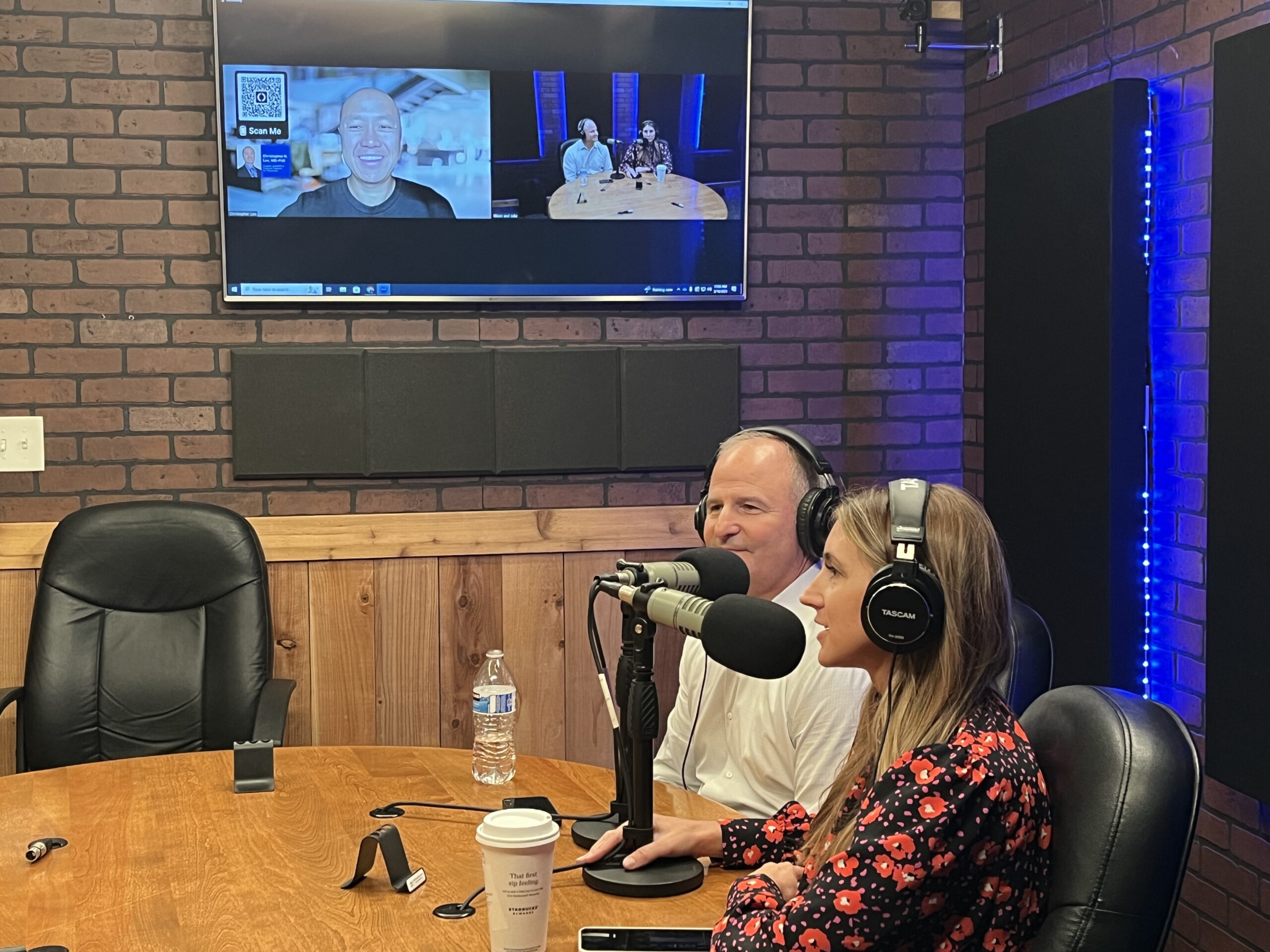
I record at Channel 511 in Columbus, Ohio. I do that because a professionally designed, sound-treated studio gives my clients a level of audio and visual quality that’s difficult to recreate at home without significant investment. A good studio gives us better sound control, better lighting, a stronger on-camera setting, and a cleaner overall presentation.
For some business podcasters, the show isn’t just content. It’s part of how potential clients assess credibility. In that kind of context, the recording environment becomes part of the positioning.
The Three Questions I Use To Decide
When I help podcasters think through this decision, I come back to three questions.
The first is this: what does the primary job of the show require in terms of production quality?
Not every show has the same job. A podcast designed to build trust in a close-knit audience may not need the same production standard as a podcast meant to support lead generation in a competitive professional space. I need to know what the show is meant to do before we can decide how polished it needs to be.
The second question is about sustainability: what publishing rhythm is my client trying to maintain, and what environment can actually support it?
This matters more than people realize. A setup that looks impressive but creates too much friction can quietly undermine the whole show. If studio recording makes it harder to publish consistently, the better strategic choice may be a strong home setup.
The third question is this: are there specific episodes where studio quality would create a meaningful return?
Sometimes the smartest answer is not either-or. It’s both. We may choose to record regular episodes at home and use a studio for a season launch, a flagship interview, or video content that needs a stronger visual standard. That kind of hybrid model often gives my clients the best balance between consistency and polish.
The Recording Environment Is Part Of The Message
My recording environment is part of my client’s message, whether we’ve been intentional about it or not. That’s why I want the choice to be strategic.
I want it to reflect my client’s why, and fit the role their podcast plays in thier business. And I want it to support a process we can sustain.
That’s the setup I would recommend every time.
Frequently Asked Questions About Podcast Recording Setup
What is the best podcast setup for business podcasters?
The best setup is the one that supports the real job of the show. For some business podcasters, that will be a home setup that supports consistency and trust. For others, it will be a professional studio that supports authority, video quality, and stronger first impressions.
Should I use a professional studio for video podcasting?
If video is an intentional part of your strategy and your show needs a polished visual standard, a professional studio can be a strong fit. It is especially useful for launches, flagship content, and authority-building episodes.
Can a home podcast setup still sound professional?
Yes. A home setup with a quality microphone, a treated space, and solid editing can sound very good. For many podcasters, it is the most practical and sustainable way to create professional-level content consistently.
[…] Previous […]